Training Programs
Training Programs
Whatever your race distance, we have a program for you.
After 30 years of professional running, writing, and coaching, I designed my very first online program in 1996. Over the years, my methods have been tried and proven by millions of runners, from novice to advanced. I have written several dozen books on running, including Run Fast and Marathon: The Ultimate Training Guide. I have worked with TrainingPeaks for over a decade to develop interactive programs to help runners train effectively and stay on track for race day. I also offer the basic schedule for each program for free, here on my website. -Hal Higdon
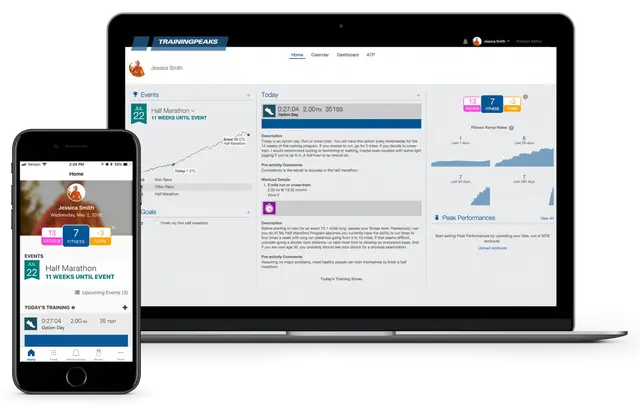
- Monitor your progress with TrainingPeaks’ online tools, apps, and wearable integrations
- Customize your training zones, heart rate thresholds, pace goals, and more
- Stay motivated with daily tips from Hal in your inbox
- Access charts and graphs to understand training load
- Tap into TrainingPeaks content and experience
- Toggle easily between miles and kilometers
Marathon Training
From Novice to Advanced, Hal offers more than a dozen different training programs for every skill level and pace. Incorporating wisdom from Hal’s bestseller Marathon: The Ultimate Training Guide, these marathon programs have evolved to suit the modern runner.Learn More
- Novice 1
- Novice 2
- Intermediate 1
- Intermediate 2
- Advanced 1
- Advanced 2
- Novice Supreme
- Personal Best
- Senior
- Marathon 3
- Boston Bound
- Multiple Marathons
- Alternate Marathon
- DOPEY CHALLENGE
Half Marathon Training
Countless half-marathoners have used Hal’s programs, whether getting ready for their first race or their twentieth. Use our half marathon interactive plans to build endurance and taper properly for your next 13.1.Learn More
5K Training
Whether a first-time runner or a regular road-warrior, we know how much it means to get that personal best. Choose from four different programs designed for 5K runners.Learn More
8K Training
An often overlooked distance, 8Ks remain popular among cross-country runners, particularly in college programs. Hal has you covered, offering three levels for your next 8K.Learn More
10K Training
Make sure you are set to run your fastest for this increasingly popular distance. Whether an experienced runner or a first-timer, try Hal’s interactive 10K programs today.Learn More
15K & 10 Mile Training
Strike the right balance of speed and stamina as you find a training program that helps you peak for your next 15K or 10-mile race. Choose from three different experience levels.Learn More
Post Marathon Recovery
Recovering from your latest marathon? Looking ahead to the next one? Hal offers programs to keep you moving even with race day behind you.Learn More
Base Training
Hal offers three levels of his 12-week Base Training program, designed to get you into shape for a race later in the year or help you maintain performance between races.Learn More
More Training
We offer a number of programs to prepare you for triathlons, tough weather, fitness walking, and more. New to running? Try Hal’s Beginning Runner’s Guide.Learn More
- Ultramarathon 50K
- Cross Country
- Triathlon 1
- Triathlon 2
- Triathlon Supreme
- Winter
- Fitness Walking
- Beginning Runner’s Guide – 30/30 Plan
-
Marathon Training
“Motivation remains key to the marathon: the motivation to begin; the motivation to continue; the motivation never to quit.” Among my most enjoyable activities is helping runners train for the marathon. I estimate that I have assisted more than a half million runners reach the finish line of 26 mile 385 yard races. Even that estimate may be low given the number of people who have purchased copies of my best-selling book, Marathon: The Ultimate Training Guide, who have signed up for my interactive training programs or who, like you, have surfed this site. ALL MARATHON PROGRAMS 40 percent of the 45,000 who register for the Chicago Marathon each year are doing their first marathon, often their first road race! The first question these so-called Newbies ask is: “How do I train?” Whether from word-of-mouth or some other source, they learn that my 18-week schedule for beginning runners, Novice 1, is pretty much foolproof. It is a gently progressive program involving four days of running a week. The long run in the first week of training is a relatively easy 6-miler. Each weekend, the long run gets longer, peaking at 20 miles three weeks before the marathon. A tapering period allows runners to gather energy for the race. Cross-training and ample amounts of rest prevent overtraining. And it works! Many experienced runners doing their second, third and fourth marathons stick with the Novice 1 program, because it fits well into their busy lives. Or they choose Novice 2, which provides a slight bump upward in difficulty. Recently at an Expo where I was signing copies of my book, one woman told me that she had used my Novice 1 program for 13 consecutive marathons! For those hoping to improve, to set Personal Records, or to qualify for The Boston Marathon, I also offer two Intermediate and two Advanced programs, each one a logical step upward in difficulty and intensity. And for those who have more than 18 weeks to train, I also offer two 30-week programs: Novice Supreme, aimed at runners new to the sport, and Personal Best, aimed at runners seeking peak performance. Consider also Marathon 3, featuring only three days of running a week and slightly more cross-training. You can become my virtual training partner by using the free schedules here on this site, or you can sign up for the interactive version of all my programs, available through TrainingPeaks. Each day I will send you e-mail instructions telling you what to run each day, offering also tips on your training. You will learn much, much more about how to train for a marathon by signing up for one of my interactive programs. I strongly urge that you consider to do so. Never before has it been easier to run a marathon. Never before has it been more fun! Good luck with your training.
From Novice to Advanced, Hal offers more than a dozen different training programs for every skill level and pace. Incorporating wisdom from Hal’s bestseller Marathon: The Ultimate Training Guide, these marathon programs have evolved to suit the modern runner.
-
Half Marathon Training
THE HALF MARATHON IS A FRIENDLY DISTANCE. Beginners, who have gotten their introduction to road running in a 5-K or 10-K, can look to the half as the next step upward. Experienced runners like half marathons, because training for and racing 13 miles requires somewhat less time commitment than does a full 26. SEE ALL HALF-MARATHON PROGRAMS The excitement around half marathons often is the same as at a marathon–except you get to go home early. Also, you can use half marathon races as part of your training for later marathons. Knowing your time at the half gives you a good idea of what to expect when you run the full marathon. This is why more than four times as many runners now run half marathons vs. full marathons. To plan your training program for the half marathon, click on one of the appropriate links on the accompanying menu. For more detailed instructions plus extra training advice and tips, consider signing up for one of my Interactive programs, available through TrainingPeaks. For twelve weeks, I will send you daily emails telling you how to train. Consider also acquiring a copy of my latest book, Hal Higdon’s Half Marathon Training, available from Human Kinetics. So lace up your running shoes. It’s time to start training for your half marathon race.
Countless half-marathoners have used Hal’s programs, whether getting ready for their first race or their twentieth. Use our half marathon interactive plans to build endurance and taper properly for your next 13.1.
-
5K Training
FOR MANY INDIVIDUALS, five kilometers (5,000 meters, or 3.1 miles) is the first competitive distance they try. It’s their first race T-shirt, their introduction to the world of road racing. But experienced runners like 5K’s too. 5K races are fun to run and easy to race. Unlike marathons, you don’t need to spend 18 weeks training specifically for them, and recovery time is measured in days, not weeks. SEE ALL 5K PROGRAMS For that reason, the 5K is the most popular racing distance in the United States. If you are a beginner, you can be standing at the starting line of your first 5K after only a few months training. It will take some effort on your part, but not a lot. For those who have never run or walked before, you will find information on how to get started in my Beginning Runner’s Guide. (The Novice program below appears in that booklet.) For those who would like to train a bit harder, here also are training programs for intermediate and advanced runners. And for those who don’t intend to become runners, here is a walking program to help you train for your first 5K. Click on one of the links below to access my 8-week schedules for 5K runners, Novice, Intermediate, Advanced and Walkers. On these screens, you will also find instructions on how to do the different workouts, but for more detailed instructions plus extra training advice and tips, consider signing up for one of my interactive programs, available through TrainingPeaks. Click here to access the menu listing all of my Virtual Training programs. For eight weeks leading up to the 5K race of your choice, I will send you daily emails telling you how to train. Regardless of the path you take, let’s get started on it now.
Whether a first-time runner or a regular road-warrior, we know how much it means to get that personal best. Choose from four different programs designed for 5K runners.
-
8K Training
The 8K serves as an “in-between” distance, almost an “offbeat” distance since it is not run that often. Five miles in length, the 8K occupies a spot somewhere between the more popular 5K and 10K distances. Yet if there is a big road race 8K in your town, you’re going to run it. SEE ALL 8K PROGRAMS This is certainly true in Chicago, where, early in spring, the Shamrock Shuffle opens the racing season that ends in the fall with the Chicago Marathon. Those two events define running in Chicago. Chicago has always been an Irish city. Having come from those same roots (my mother was an O’Leary), I naturally am partial to a race with “shamrock” in its title. You can’t always depend on warm spring weather in Chicago, but with more than 20,000 finishers each year, the Shuffle is the largest 8K race in the United States, well ahead of popular races at that distance in San Diego, Buffalo, Milwaukee and Portland. If you live in one of those cities–or in another city that offers an 8K race–here is a training program for you. Regardless of your skill level–whether novice, intermediate or advanced–this 8-week program will get you to the finish line.
An often overlooked distance, 8Ks remain popular among cross-country runners, particularly in college programs. Hal has you covered, offering three levels for your next 8K.
-
10K Training
TEN KILOMETERS IS A POPULAR RACING DISTANCE. Many runners start by entering a 5K, then shift upwards to the 10K (10,000 meters, or 6.2 miles) en route to a marathon. Or they begin at the half and full marathon distances and look downward, realizing they can improve their speed and race more frequently at shorter distances, often in smaller races. This is the theory behind my best-selling book, Run Fast. 10K races are fun to run and easy to train for. Unlike marathons, you don’t need to spend 18 weeks training specifically for them, and recovery time is measured in days, not weeks. SEE ALL 10K PROGRAMS If this is your first 10K race, or race at any distance, pick the Novice program. If you are an experienced runner looking for a gentle maintenance program, do the same. If you are looking for more of a training challenge, move up to Intermediate. The most experienced runners probably would be happiest with Advanced. I also offer a walking program. See the links to programs at various levels, below. On these screens, you will find instructions on how to train but for more detailed instructions plus extra training advice and tips, consider signing up for one of my interactive programs, available through TrainingPeaks. For eight weeks leading up to the 10K race of your choice, I will send you daily emails telling you how to train. . So lace up your running shoes. It’s time to start training for the 10K.
Make sure you are set to run your fastest for this increasingly popular distance. Whether an experienced runner or a first-timer, try Hal’s interactive 10K programs today.
-
15K & 10 Mile Training
The 15K is a useful and exciting racing distance. It’s a “between” distance. The 15K offers a challenge for those who have run their first 5K and 10K races and want to go a bit further without quite committing to a marathon, or even a half marathon. Experienced runners enjoy the 15K, because it offers a different distance, one to relieve boredom. I always have liked running 15K races and have had some of my best times and performances at this 9.3-mile distance, as well as in slightly longer 10-mile races. SEE ALL 15K & 10 MILE PROGRAMS Click on the links below for access to 15K training programs for Novice, Intermediate and Advanced runners. If you are new to running or haven’t run a race as long as 15K, you probably will want to choose my Novice Program. It features three days of running plus two days of cross training. Long runs peak at 8 miles, just short of your race distance. On two days, I suggest you do some strength training combined with stretching. One day is dedicated to rest. More experienced runners may want to select my Intermediate Program. It is one step up in degree of difficulty from the Novice program, featuring five days of running–and one of those days features speedwork: tempo runs and training on the track. Long runs peak at 10 miles, further than you’ll run in the actual 15K race.I also suggest that Intermediate runners strength train two days a week as well as cross train. One day is also dedicated to rest. Only the most seasoned runners should select my Advanced Program. It’s tough and features six or seven days of running. (Advanced runners are given the option of running or resting on Fridays.) It also contains two days of speedwork on Tuesdays and Wednesdays. Long runs peak at 13 miles. No cross-training, since Advanced runners usually prefer to run, not bike, swim or walk. Only a small percentage of runners can prosper following a training program this tough, so think twice before selecting it. For the full 10-week schedules, click on one of the links to the Novice, Intermediate, or Advanced programs. On these screens, you will also find instructions on how to do the different workouts, but for more detailed instructions plus extra training advice and tips, consider signing up for one of my Virtual programs, available through TrainingPeaks. Click here to access the menu listing all of my Virtual training programs. For ten weeks leading up to the 15K or 10-mile race of your choice, I will send you daily emails telling you how to train. So lace up your running shoes. It’s time to start training for your next 15K or 10-mile race.
Strike the right balance of speed and stamina as you find a training program that helps you peak for your next 15K or 10-mile race. Choose from three different experience levels.
-
Post Marathon Recovery
In the chapter titled “Mile 27” in his best-selling book, Marathon: The Ultimate Training Guide, Hal Higdon explains what runners should do immediately after crossing the finish line:
That 27th mile is particularly important when it comes to speeding postmarathon recovery so that you can run and race again. Your actions after the first 5 seconds after crossing the line may be crucial to your recovery—as are the next 5 minutes, the next 5 hours, the next 5 days and the next 5 weeks. Postmarathon recovery is something many runners pay little attention to. But by organizing your postrace plans as well as you do your prerace plans, you can recover faster and more comfortably and minimize future injuries.
One of the following three plans (whether you are a novice, intermediate or advanced runner) will speed your recovery. They begin with three days of no running, followed by a little running, climaxed at the end of the week by a celebratory run with friends, who also might be one week past their triumphs. Then four weeks of gradually progressive running leading to a race that could be anywhere from 5K to a half marathon. Once completing one of these recovery programs, you will be ready to train hard again. Although these Post Marathon Training programs originally were designed for marathoners, they also can be used by recovering half marathoners. Be aware that all three of Hal’s Post Marathon Training programs are available in an interactive format offered by TrainingPeaks.
Recovering from your latest marathon? Looking ahead to the next one? Hal offers programs to keep you moving even with race day behind you.
-
Base Training
Here is the training program you’ve been looking for: Base Training. Looking for a program to develop your base fitness before starting a marathon program? This is it. Time to get in shape For Novice runners–those who never have run before–this may mean getting into some semblance of shape so that they can begin my 18-week marathon training program. For those of you who have been running several years, Week 1, which is climaxed by a 6-mile long run on the weekend may not seem that tough, but it’s like Mount Everest for those who have never run before. This Base Training program will give novice runners a chance to gradually raise their fitness level so they can begin that first week of training with some chance of success. Advanced runners often have a different problem. They’ve run a bunch of marathons and other races at different distances, and they want to improve their performances, not merely in the marathon, but in other distances they run frequently, like the 5K, 8K or 10K. These advanced schedules will tell them how to do just that, showing how to mix various forms of speedwork (interval training, tempo runs, hills, fartlek) into their training week. They also get a chance to race frequently (5 times in fact) with goal 5K and 10K races in the last few weeks. The Intermediate runners fall somewhere in between. These are runners who probably have been running several years, may have run one or two marathons, have faithfully trained through the winter, maintaining a certain mileage base, and now they want to build on that base. They want to continue to maintain that fitness level–perhaps improve on it slightly–so they can start marathon training in better shape than before. The 12-week Intermediate schedule offers some speedwork and some racing and should provide what they want. So here is Base Training in multiple variations. Whichever one of my programs you choose, I hope it will help you to achieve your running goals.
Hal offers three levels of his 12-week Base Training program, designed to get you into shape for a race later in the year or help you maintain performance between races.
-
More Training
There are many reasons to train outside of the marathon, half-marathon, and common short distances. For experienced runners, you may be looking ahead to Triathlons and Ultramarathons. Others may be interested in Base Training, Fitness Walking, or continuing to meet your training goals when rough weather strikes. This “More Training” section is a collection of popular programs that do not fall neatly into any particular race distance on the site. Hal’s Beginning Runner’s Guide can also be found below.
We offer a number of programs to prepare you for triathlons, tough weather, fitness walking, and more. New to running? Try Hal’s Beginning Runner’s Guide.